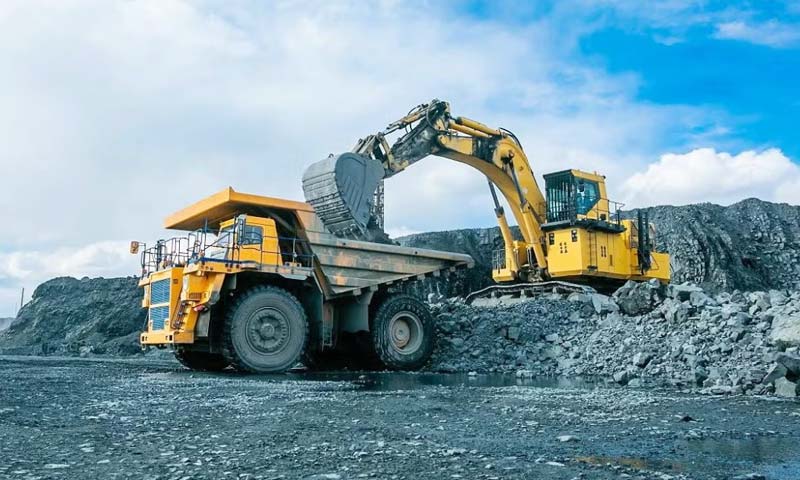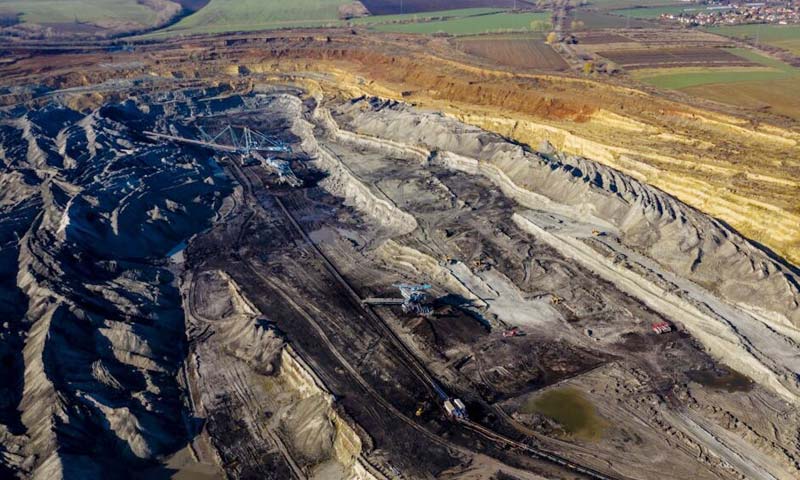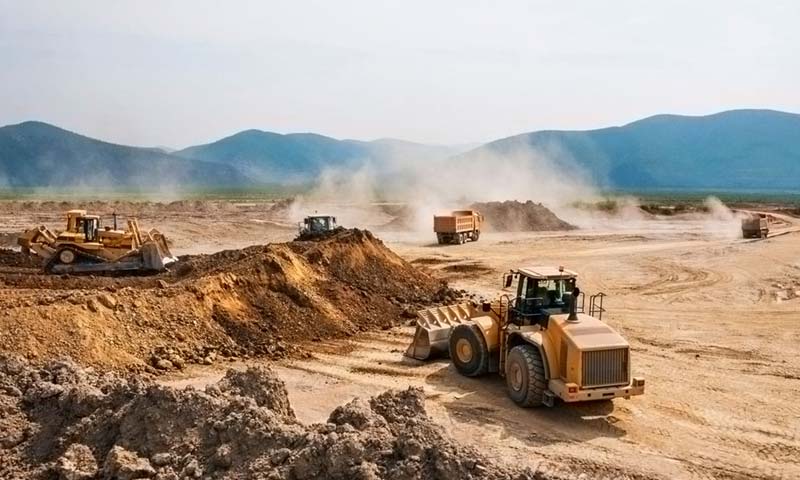
After being treated with a special polymer spray, the surface of the stockpiles forms a flexible crust layer that is resistant to both rainwater erosion and winds exceeding level 10. This crust layer, due to its dense sealing properties, also acts as a coal spontaneous combustion inhibitor inhibitor and provides stabilization for roadside slopes.
Flexible Crust Technology for Industrial Deposits
Engineered with highly hydrophobic molecular groups and adding anti-cracking agents and other additives, achieve elastic bonding between sand particles, resulting in highly hydrophobic and highly UV-resistant properties. This technology is globally recognized as “flexible protective crust / surface sealant.”
This technology has the following characteristics:
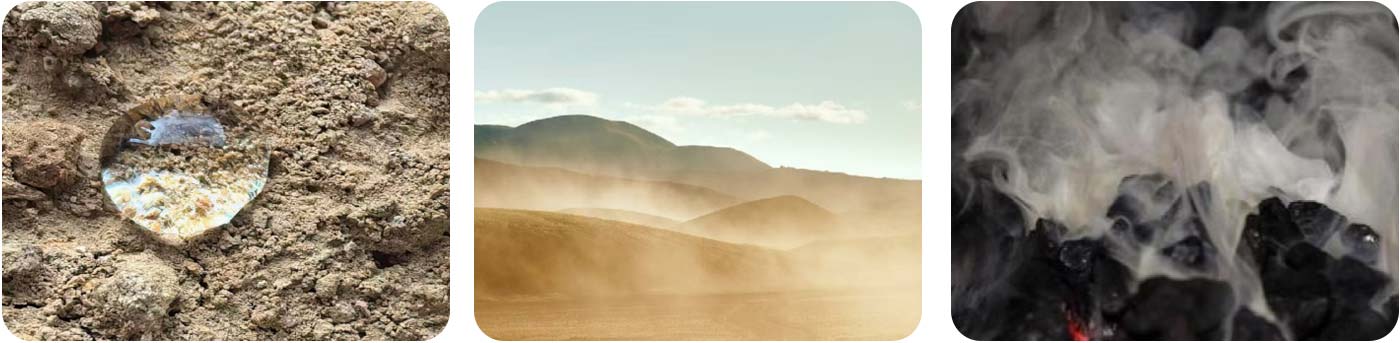
Traditional cement/asphalt pavement has the following limitations:
1) High cost (40-100 USD/㎡).
2) The construction period is long (at least 1 month), which seriously affects road traffic.
3) Cement pavement is easily damaged by heavy vehicles (usually can use 2-3 years) and is not suitable for temporary roads such as mines.
Advantages of flexible pavement film-forming technology:
1) Based on the original foundation construction, it has both flexibility and strength, and excellent pressure resistance and waterproof performance.
2) Low construction cost and fast forming speed.
3) Effectively solve the problems of dust, water damage, and uneven road surface on earth and stone roads.
4) Particularly suitable for temporary road needs, economical and efficient.
The service life depends mainly on the vehicle load and traffic frequency.
1) Under normal conditions: 10-15 years.
2) Heavy vehicles (over 50 tons) shorten the life of all types of pavement.
Compared with traditional pavement:
1) Cement pavement will develop irreparable cracks in 2-5 years under heavy load; when crushed by heavy vehicles, cement pavement is like glass, once broken, it cannot be repaired and can only be rebuilt.
2) Flexible film-forming pavement is made ofpolymer resin and bio-based materials, has self-healing functions, and can extend its service life through repair. Its principle is similar to the self-repair mechanism of the skin.
The maintenance method is simple and low cost.
1) Regularly clean up large pieces of debris from the road.
2) If there is foreign dust, clean it regularly or use a water truck to clean it.
3) If damage is found, repair it promptly with local materials (sand + GOODROAD agent).
4) Heavy-loaded sections need to strengthen daily maintenance.
Material composition: Environmentally friendly polymer materials and bio-based materials, non-toxic and non-flammable.
Certification status: The product has passed certification by the Chinese authoritative organization.
Dust suppression is achieved in two ways:
1) Physical covering: The flexible film-forming pavement layer seals out dust.
2) Chemical dust suppression: The membrane contains a slow-release dust suppressant.
Note: It has a limited effect on large amounts of foreign dust, but it is better than traditional cement/asphalt pavement.
Thư điện tử
Điện thoại /WeChat
Vị trí