Table of Contents
Quarry road stabilization needs a defined operating objective before a product can be selected. For quarry access roads, fresh crusher fines and aggregate spillage continually enter the traffic surface. That makes the relationship between material, application and actual site use more useful than a generic claim about a binder. This guide focuses on defining the engineering scope and the evidence a project team should request before scaling up.
A practical quarry road stabilization programme should answer three questions: what source or layer is being treated, what procedure can be repeated on site, and what observation will show that the treatment remains fit for its intended use. The following decision sequence connects these questions to quarry access roads, with product selection treated as part of the work method rather than a substitute for it.
Define the scope of quarry road stabilization
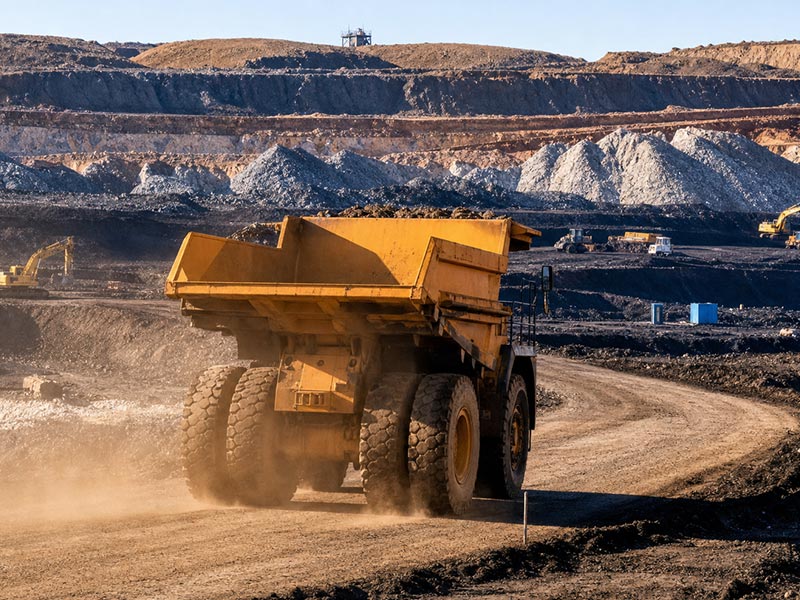
For quarry road stabilization, start by documenting aggregate grading, spillage locations, truck counts and housekeeping records. Identify the project owner, the intended operating interval and the locations that must remain accessible during the work. Keep current observations separate from expected benefits so the supplier can see which statements are measured and which still need a trial.
When specifying quarry road stabilization, separate surface function from structural performance. A dust treatment can improve particle retention without establishing the capacity of the underlying foundation. A mixed stabilized layer may require design thickness, strength, drainage and construction controls before it can be used as part of an engineered pavement.
Define the operating objective for quarry road stabilization
Before approving quarry road stabilization, describe the problem in terms of an observable site condition and an operating requirement. Ask what must improve, where it must improve and how that improvement will be checked. A product category name by itself does not define a successful road or stockpile treatment.
Separate dust generated within the treated layer from fresh material dropped onto it. Improve load containment before attributing every plume to binder failure. Include these conditions in the quarry road stabilization brief. Locate inspections at crusher exits, weighbridge approaches and the boundary with public roads, and document any part of the site that falls outside the proposed treatment scope.
Defining the engineering scope in the field
As part of quarry road stabilization procurement, identify traffic loading, ground conditions, material sources and design service requirements. Record the assumptions behind the proposed section and how construction will verify them. Where conditions change along the alignment, divide the work into representative zones instead of applying a single convenient detail everywhere.
Ask the responsible engineer which test results and field observations support the intended use. A laboratory value becomes meaningful only with its preparation and exposure conditions. Do not infer a safe vehicle load, layer thickness or road lifetime solely from a product description.
For the proposed quarry road stabilization work, confirm what a normal operating day looks like and what would make the test unrepresentative. A temporary reduction in traffic or handling can make a treatment appear successful while leaving the routine operating question unanswered.
Match the treatment to the product role
During a quarry road stabilization review, a concentrated liquid road stabilizer must be assessed together with the way it reaches and interacts with the target material. Surface spraying and mixing into a layer are different procedures. The proposed method needs to state treatment location, preparation and the product quantity basis before a meaningful comparison can be made.
For quarry road stabilization, loose particle retention and improvement of a load-bearing layer should be specified separately. A surface that no longer releases visible fines may still deform if the underlying material is wet or weak. Conversely, a reasonably supported road can still generate dust from its exposed wearing surface.
MiningWay ER EASYROAD is described by MiningWay as a concentrated liquid treatment intended to bind loose particles in unpaved road materials. Mixing depth, dilution, material compatibility and traffic release need a project-specific procedure. For quarry road stabilization, request a current procedure based on the actual material before assigning a dose, reopening time or service-life expectation.
Diagnosing damage before retreatment for this project
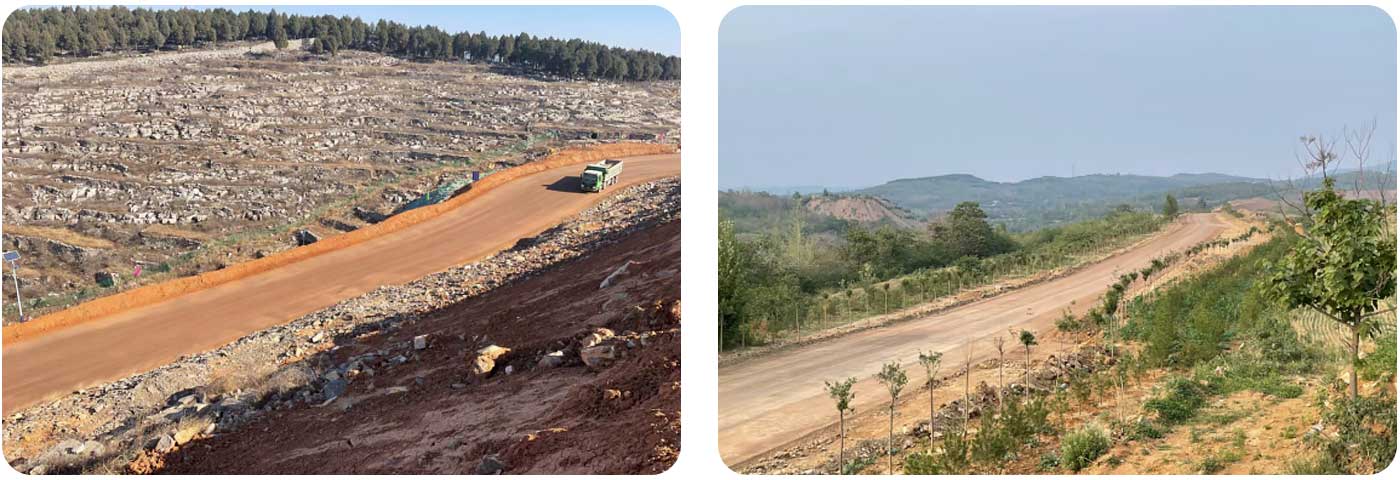
Describe the pattern before choosing the remedy. Streaks, loose edges, wheel-path raveling, widespread softness, crust peeling and local erosion point to different possible causes. Map where the defect starts and whether it coincides with turns, water, material changes or handling activity.
Use a small corrective test to check the diagnosis. Repairing the foundation, adjusting preparation, improving coverage or changing the method may be more appropriate than increasing dose. Keep the correction separate in the records so its performance can be assessed without rewriting the history of the original work.
Apply this check to the quarry road stabilization scope using the recorded conditions for quarry access roads. Ask the site team and supplier to identify the observation that would change the proposed method, and retain that answer with the trial record rather than leaving it as an informal site instruction.
Checking material compatibility for this project
When planning quarry road stabilization, collect samples from locations that represent the range of conditions. Keep source zones separate until the variation is understood. Request a screening procedure for water quality and substrate chemistry where these may affect mixing, bonding or the downstream process.
When comparing quarry road stabilization options, collect samples from locations that represent the range of conditions. Keep source zones separate until the variation is understood. Request a screening procedure for water quality and substrate chemistry where these may affect mixing, bonding or the downstream process.
Apply this check to the quarry road stabilization scope using the recorded conditions for quarry access roads. Ask the site team and supplier to identify the observation that would change the proposed method, and retain that answer with the trial record rather than leaving it as an informal site instruction.
Selecting a treatment for this project
To evaluate quarry road stabilization, start with the job the material must perform. Retaining surface fines, reducing evaporation-driven dust, improving a mixed road layer and protecting a static pile are different functions. Ask the supplier to identify which function its proposed procedure addresses. A buyer should be able to connect the promised result to a treatment location and a measurable observation.
In the quarry road stabilization work plan, list the constraints that would rule out the option before arranging a demonstration: incompatible material chemistry, unacceptable runoff, inability to protect the curing area, missing mixing equipment or unavoidable daily disturbance. Eliminate infeasible options first, then compare the remaining treatments through a representative test.
Apply this check to the quarry road stabilization scope using the recorded conditions for quarry access roads. Ask the site team and supplier to identify the observation that would change the proposed method, and retain that answer with the trial record rather than leaving it as an informal site instruction.
Compare the available treatment approaches
Keep material supply, engineering design and construction quality responsibilities clear. The enquiry should say whether the buyer needs product guidance, a supervised trial or a complete engineered construction package. These scopes require different evidence and cannot be compared as interchangeable bags or litres of binder.
A quarry road stabilization comparison should retain the distinction between surface protection, mixed-layer improvement and changes to site operation. The table below is a decision framework; it does not rank a product or establish a universal performance level.
| Approach | Main purpose | What to confirm |
|---|---|---|
| Watering and routine maintenance | Short-term control alongside normal road care | Water delivery, repeat work and wet surface condition |
| Flexible surface film | Particle retention at a prepared wearing surface | Support, coverage, abrasion and local repairs |
| Mixed soil or aggregate treatment | Improvement within a defined constructed layer | Material compatibility, mixing and construction acceptance |
| Mechanical improvement or permanent surfacing | A different road construction or maintenance scope | Design requirements, access window and lifecycle cost |
Build the site record and acceptance decision
The quarry road stabilization record should identify the material source, area or layer, product batch, actual quantities, preparation, weather, operating activity and inspection locations. Add photographs with dates and locations. If part of the test was disturbed, repaired or treated differently, preserve that history instead of replacing it with the final photograph.
For a quarry road stabilization enquiry, use the evidence to decide whether the proposed method can be repeated over the remaining quarry access roads. Acceptance should describe the conditions represented, the follow-up work required and the triggers for review. A useful decision can be conditional; it need not imply that every future section, pile or material delivery is already approved.
Reference context and next steps
For a repeatable quarry road stabilization method, for independent background, consult FHWA Construction Publications. This reference provides general technical context; it is not a certification, endorsement or performance test of MiningWay products. Apply the project’s current requirements and the specific evidence for the proposed material.
To discuss quarry road stabilization, send the MiningWay team aggregate grading, spillage locations, truck counts and housekeeping records, along with photographs of crusher exits, weighbridge approaches and the boundary with public roads. Ask for a material-specific recommendation, the technical and safety documents, a trial method and a quotation that states the preparation and follow-up scope. You can review the relevant site application information and contact the technical team before ordering.
Frequently asked questions
What should be defined before quarry road stabilization?
Define the target surface or layer, operating objective and site constraints. For quarry access roads, provide aggregate grading, spillage locations, truck counts and housekeeping records. Agree on how the proposed result will be checked before choosing a treatment.
Which product should be evaluated for quarry road stabilization?
MiningWay ER EASYROAD is a relevant product to discuss because its stated role is a concentrated liquid treatment intended to bind loose particles in unpaved road materials. Suitability depends on the actual material and work method; it should be confirmed through current documentation and a representative trial.
Is there one universal dose for quarry road stabilization?
No. The recommendation must state whether it refers to concentrate, prepared solution, dry material mass or treated volume. Material condition, preparation and the intended use affect the procedure, so obtain a project-specific method.
How should quarry road stabilization performance be checked?
Use consistent inspection locations and record weather and operating activity. Check crusher exits, weighbridge approaches and the boundary with public roads. Compare representative conditions and use suitable technical expertise where the result supports an engineering or environmental decision.
What information is needed for a quarry road stabilization quotation?
Provide the material, geometry, service period, traffic or handling, water availability and photographs. Ask the supplier to separate product, freight, preparation, application and follow-up support so the offered scope can be compared fairly.